Frequently Asked Questions
1. Why did Seymour Food 2 Kids change its name?
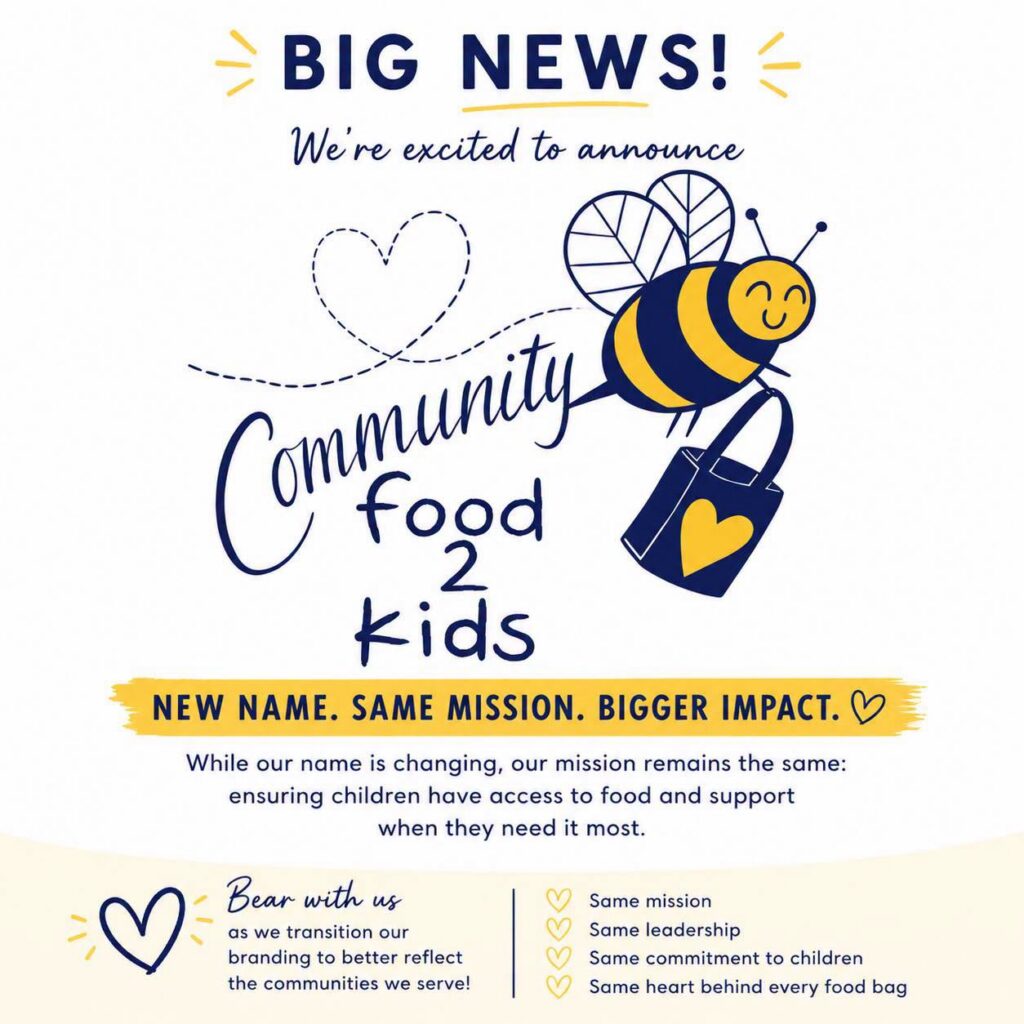
Seymour Food 2 Kids is now Community Food 2 Kids.
Our mission hasn’t changed—we’re still committed to ensuring children have access to food and support when they need it most. Our new name better reflects the communities we now serve and our vision for future growth beyond Seymour.
New name. Same mission. Bigger impact.
2. What is Community Food 2 Kids?
Community Food 2 Kids is a youth-led 501(c)(3) nonprofit dedicated to fighting childhood hunger. We provide weekend food bags and stock school snack closets so children have access to nutritious food when they need it most.
3. Who do you serve?
We currently provide:
- Weekly weekend food bags for approximately 70+ children in 6+ community schools/programs
- Snack closets in every Seymour school
- A snack closet in one Oxford elementary school
- Food support for the Ansonia Boys & Girls Club
As Community Food 2 Kids, we hope to continue expanding our reach to serve even more children.
4. How do children receive food?
Schools confidentially identify students who would benefit from the program. Every week, our volunteers deliver food bags to the schools, where staff discreetly distribute them before the weekend. Families never apply directly through us, helping ensure every child’s privacy is protected.
5. What is included in a food bag?
Each bag contains easy-to-prepare, kid-friendly foods such as oatmeal, cereal, mac and cheese, pasta, soup, granola bars, fruit cups, and healthy snacks to help bridge the gap over weekends when school meals aren’t available.
6. What are snack closets?
Snack closets are small pantries located inside schools that teachers can access whenever a student needs something to eat during the school day. They provide immediate support for children who come to school hungry or need a snack to stay focused and ready to learn.
7. How much does it cost to help?
It costs approximately $8 per week to provide one child with a weekend food bag.
A gift of about $320 provides food for one child for an entire school year.
8. How is Community Food 2 Kids funded?
We’re 100% community supported through donations, grants, fundraisers, and local business partnerships. Every dollar donated goes directly toward feeding children and supporting our programs.
9. How can I help?
There are many ways to make a difference:
- Donate online, by check, PayPal, or Venmo
- Purchase items from our Amazon Wish List
- Volunteer at a food bagging event
- Organize a food drive
- Sponsor a child or become a business partner
Every act of generosity helps feed local children.
10. Can I volunteer?
Yes! Our volunteers pack food bags, deliver supplies, organize food drives, assist with events, and help spread awareness. Family-friendly bagging events are held approximately every six weeks during the school year.
11. Why is this program needed?
Food insecurity affects more families than many people realize. Many households struggle to put food on the table but don’t qualify for assistance programs.
Community Food 2 Kids helps bridge that gap, ensuring children have nutritious food on weekends and healthy snacks during the school day so they can learn, grow, and thrive.
12. Are donations tax-deductible?
Yes. Community Food 2 Kids is a registered 501(c)(3) nonprofit, so donations are tax-deductible as allowed by law.
Still have questions?
We’re happy to help! Contact us anytime to learn more about our programs, volunteer opportunities, partnerships, or ways to support Community Food 2 Kids.